

x
Type in what your trying to find.
Type in what your trying to find.

In a sad day for Australian gardening, Burke’s Backyard magazine will publish its final issue in March 2013. A popular gardening magazine for the past 15 years, BBY has suffered from falling circulations and advertising revenue, like most current print-based gardening publications. And what’s happening to gardening magazines world-wide?
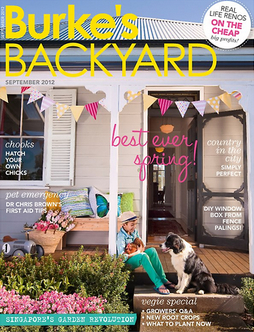 Don Burke said “The way Australians took Burke’s Backyard to their hearts and families is something I will never forget and I would like to thank them for it. 30 years is an amazing time for support for these activities to exist but in recent times the circulation and advertising for the magazine were underachieving and it ceased to be profitable. The partnership therefore was forced to close the magazine. The Burke’s Backyard YouTube Channel, website and books will continue.”
Bauer Media Group, the new owners of ACP Magazines, decided to close the magazine as average sales of Burke’s Backyard fell to around 42,000 copies a month, compared with 122,000 copies in 2004 when its companion TV show went off air. Current subscribers will be offered a transfer to another title or a refund on their unused subscription.
 Will this happen to other gardening publications too? As they are supported mostly by older readers, print magazine subscriptions and circulations for gardening and lifestyle publications have been falling steadily for the past few years, with GenX and GenY show their allegiance to online information, rather than print. Australia’s Your Garden, published only quarterly, is also sitting at around the 40,000 circulation. Gardening Australia magazine continues to hold the premier gardening magazine position with a relatively healthy circulation in the low 70 thousands but this is down from highs of over 100K a few years ago. (Australia’s population is 22 million)
And now a snapshot of gardening magazine sales from around the world………

 In the UK (with a population about 62.6 million, or about 3 times that of Australia), RHS The Garden still sells around 360K, and BBC Gardener’s World, sits at 254K. Smaller publications like Amateur Gardening and Gardens Illustrated are still surviving at about 35K/month and Garden News at 29K, Garden Answers at 18.5K and niche publication The Irish Garden at 14.7K.


In New Zealand, (population 4.4.million) New Zealand Gardener is maintaining sales of 44.5K. Go Gardening, distributed through NGIA garden centres claims an unaudited print run of 50-80K issues.


In South Africa, (population 50 million) SA Garden/SA Tuin fell from 42K to 33K and SA Garden and Home declined from 63K to 56K. The Gardener sells around 45K copies.
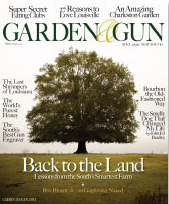
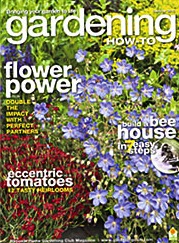 In the USA (population 312 mill), the top selling (mostly) gardening magazines seem to be Birds and Blooms, with about 1.5 million copies. Gardening How-to (official magazine of the National Home Gardening Club) tops the dedicated gardening magazines at 521K; there’s the extraordinary combination of Garden and Gun (yes, that IS real) at 261K and Organic Gardening selling a sustainable 295K.

 Garden Design (a bi-monthly) 213K; Fine Gardening 130K and Garden Making only 23K. To those figures you’d need to add the very popular Sunset magazines, which have gardening, travel and lifestyle stories and are mostly bought in the western states.
In Canada (population 34.4 mill) Canadian Gardening has fallen slightly from 100K to 97K during the past year.

In Europe, Germany’s Mein Schöner Garten with sales of 377K claims to be Europe’s biggest selling garden magazine.


I subscribe to Garden & Gun….it is not as weird as it sounds. It’s actually not so much a garden magazine but a “southern lifestyle” magazine…they cover southern food, travel, music, artisans, etc. And the occasional hunting article, thus the “gun.”
I can see the ‘outdoors’ connection now you point it out but on first acquaintance to someone from a mostly non-gun owning country, it seemed such a contradiction in terms – nurturing and growing plants mixed up with hunting and killing animals. Although, having walked around my suburb yesterday evening and observed the rabbit plague that’s descended on northern Sydney this summer, I had this sudden fantasy of everyone leaving their homes for the day and letting in a bunch of recreational shooters to clean up the problem! No doubt kinder and quicker than death from myxomatosis or calicivirus. And then we could keep same recreational hunters out of our national parks……
the Australian magazine, subTropical Gardening, is not audited but has been increasing in readership and subscribers over the past 7 years. Perhaps the result due to specialised warm climate gardening content,
Paul, I suspect it’s a combination of specialised content that satisfied a market not catered to by main stream mags (which have always been more cool climate focussed), in-depth well-researched stories, as well as high quality writing. subTropical Gardening’s success is well-earned, and a credit to you & its writers.
The Garden Guru Magazine is another gardening magazine growing strongly in Australia but again its independent and not audited. Numbers have increased from 15,000 to 30,000 in the past 12 months. This magazine benefits from the promotion it receives as the Nine Network Australia’s only gardening TV program. It is the only gardening TV program on national television in Australia on FTA TV.
Interesting! And more when you analyse the content of the OS mags doing so much better proportionally than their Oz counterparts, in all cases there is a focus on gardening, and serious gardening, not the kindergartenish learning your ABCs and 123s that our mags seem determined to foist on their (erstwhile) public. There is a market for dedicated content that is not pitched solely to a few fickle beginners who will drop it as soon as the climatic or economic wind chills. Paul’s comment underlies the need for specialised and dedicated content.
I think that beginner gardeners often get a poor serve too. As my daughter (double honours degrees) said to me, “just because I’m a beginner gardener doesn’t mean I’m stupid”. She found much of what is written for beginners to be condescendingly simplistic, and a real turn-off. And I think to be constantly told “it’s easy, and anyone can do it”, and then to fail (usually at vegetable gardening which isn’t easy AT ALL) makes beginners feel all too quickly they are brown thumbs with no future as gardeners.
I totally agree, Catherine. The problem is simplistic coverage that assumes the market is universally stupid. (And believe me, this is how media management views its readership or viewers.) Nothing is further from the truth. vegetable gardening is an excellent case study of exactly this. Growing veggies is not easy at the best of time being more susceptible to the vagaries of climate and pest plague than any form of ornamental gardening. To read a typical magazine article or TV presentation you would not imagine any of this. And have you ever costed a TV vege makeover? Many I have seen would have run into the thousands of $ ( start with prefab corrugated raised beds, tonnes, yes tonnes, of imported soil, untold amounts of manures and fertilisers plus mulches, irrigation equipment, water computers and whatever else you can use to make growing easier). A veggie garden can be a costly exercise but I have never seen any mention of how much the “to air” garden actually cost. Nor have I ever seen mention of the lead content of soil particularly in the inner city, a relic of the days when petrol was filled with lead and the residues landed in our soils. The wished for organic gardens can actually be very inorganic! Verge veggies, not for me. Then there is the dog and cat issue. Don’t get me started. Growing vegetables is commendable and rewarding but the glib way our media covers some very basic and important health issues is appalling. Is it entertainment or information? I suspect, often it is solely the former.
Whilst the argument for more complex gardening content is fair the reality in Australia is that the only hardcore gardening program Gardening Australia has suffered declining audiences for several years. The audience demographic is old and fading and the average young person who wants a garden doesn’t necessarily want to become a gardening expert to have one. The over detailed information provided is often a put off and in an age when people are time poor we need to find ways to inspire to get people started and get the “bug”. If not its all too much of a put off and difficult. The reality is its easier buy gourmet mushrooms and create a difficult dish in the kitchen than spend time and effort in the garden. we need to inspire… education comes with interest, its about time we become interesting.
I disagree with you on this, Trevor. I think gardening programs and magazines have shot themselves in the foot by promoting gardening as very easy. As soon as cooking was reinvented on programs like Master Chef as something of real skill and expertise that had to be learned, (rather than something anyone could do) its popularity soared, and sales of cookbooks went through the roof. Compare the metres of cooking books in a book shop to the couple of gardening titles, often no longer even rating their own section but mixed in with ‘lifestyle’. I think that the easier you say something is, the less people value it.
we are going to agree to disagree I suspect. Masterchef is actually not so much about cooking as much about competition and any professional chef will tell you the damage its done to their industry in not explaining how to do things properly or why they are done a certain way is enormous. Masterchef is a actually reality program focus on competition between individuals, much the same way Backyard Blitz was. Interestingly there is only one Masterchef winner that has gone on with a TV career afterwards. In the UK their TV cooking programs have strongly followed individuals with Jamie being the most noticeable and his primary message is cooking is easy, let me show you how… If serious gardening shows were going to be so well supported Gardening Australia would be growing its audience where as its treading water currently after a massive change and promotional blitz. I agree that there is definitely room to a top end program but disagree that its going to attract and reach a new audience if it makes gardening out to be something more than instinctual and a completely natural activity that improves quality of life and property values.
Make gardening an elite activity and you will appeal to a very small audience.
I don’t think that either TV ratings or the post-TV success of a chef are any measure of whether people are actually doing the activity. 2012 figures show that fewer people are watching TV anyway, and I don’t think that GenY and GenX watch TV to learn things any more than they buy magazines. Nor do I agree that saying that there are gardening skills to be learned makes it an elite activity as anyone, whether they’re young or old, rich or poor, can still learn them. If you tell people something’s really easy to do, and they fail, they feel like idiots. However, if you explain that it takes knowledge to do it well, but it’s easy to learn, you’ve got a better chance of making a life convert.
The nursery industry is certainly not seeing any growth to indicate that the current way we’re communicating about gardening is the right way. Cooking is the new ‘black’ because it’s presented as a challenging and knowledge-based activity but still do-able, & that keeps people interested – they’ll spend a whole day preparing one meal and, in the last few years, sales of cookware, cookbooks and speciality foods have grown. The gardening media has tried to get on the same waggon by constantly talking about growing your own food but I think that’s a dangerous strategy for long-term growth.
And thanks for being part of this debate, Trevor. Discussions like this can only be good for our industry.
I find it interesting that this discussion keeps going back to things like “reaching a new audience” or “find ways to inspire people to get the bug”. Isn’t this part of the problem? It may apply more to television but for magazines there is an audience, one that is not catered for because media people are chasing the convert rather than the converted. I know for a fact that “over detailed information” is not a turnoff for the latter group, in fact it is this rich content that keeps people buying magazines. Take for instance the mag I edited. Five years of constant growth in a period when the worst drought in history saw off 2 major mags that sought to pursue the convert market at a time when most in this category had given up. it was too hard to start a garden or even keep one going for them. The keen gardener will always stay with it and they kept buying. Content is king. The proof is in the results that occurred for that mag when the attempt to link in with a new audience by replacing “over detailed information” with “information-lite” were a nearly 40% decline in circulation! It’s no coincidence.
I should have added “thank goodness for GardenDrum”. Those of us disenfranchised by traditional media which steadfastly hold to a belief in an illusory mass market of emerging, new gardeners, at least have an option. Yippee!